The Challenge
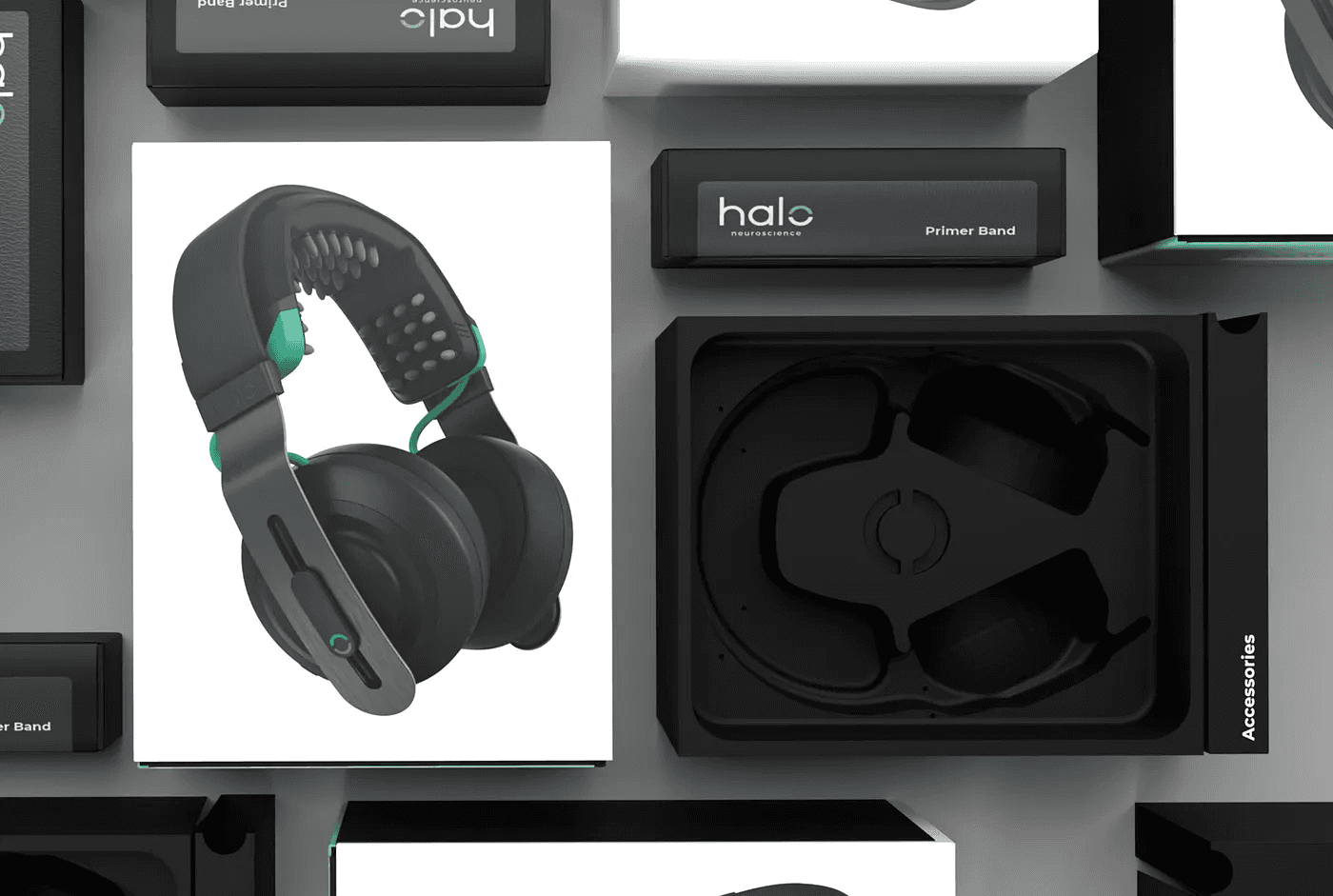
Halo Sport 2 was launching into a market full of skepticism. Neuropriming technology that improves athletic performance sounds like science fiction—or worse, like the pseudoscience gadgets flooding the wellness market. The product worked, but looking legitimate was half the battle. And the first place people judged legitimacy was the packaging.
We had a new product, a tight budget, an aggressive launch timeline, and no packaging designer. The challenge wasn't just creating a box—it was creating something cinematic that communicated premium quality, staying under budget in a startup environment, maximizing pallet efficiency for cost-effective shipping, and making it look like it belonged next to established brands. This case study is about seeing a critical gap, teaching myself an entire discipline, and delivering work that directly contributed to a successful launch.
The Problem
We Had No Packaging Designer
Halo was a lean team. We had product designers, engineers, marketers—but no one who specialized in physical packaging. And packaging wasn't optional. It was the first brand touchpoint for retail customers, the credibility signal that separated us from cheap gadgets, and a manufacturing constraint that affected unit economics. Bad packaging wouldn't just look unprofessional—it would undermine the entire product positioning.
The constraints were real. This wasn't a blue-sky creative project where we could explore without limits. We had to stay within budget because startups don't have unlimited packaging dollars. We had to maximize pallet sizing because inefficient dimensions meant wasted shipping costs at scale. We had to work within manufacturing limitations because not every material or finish is cost-effective at our production volume. And we had to launch on schedule because there was no time to hire, onboard, and ramp a specialist.
The gap was clear: someone had to own this. That someone was me.
The Design Challenge
I Became the Packaging Designer
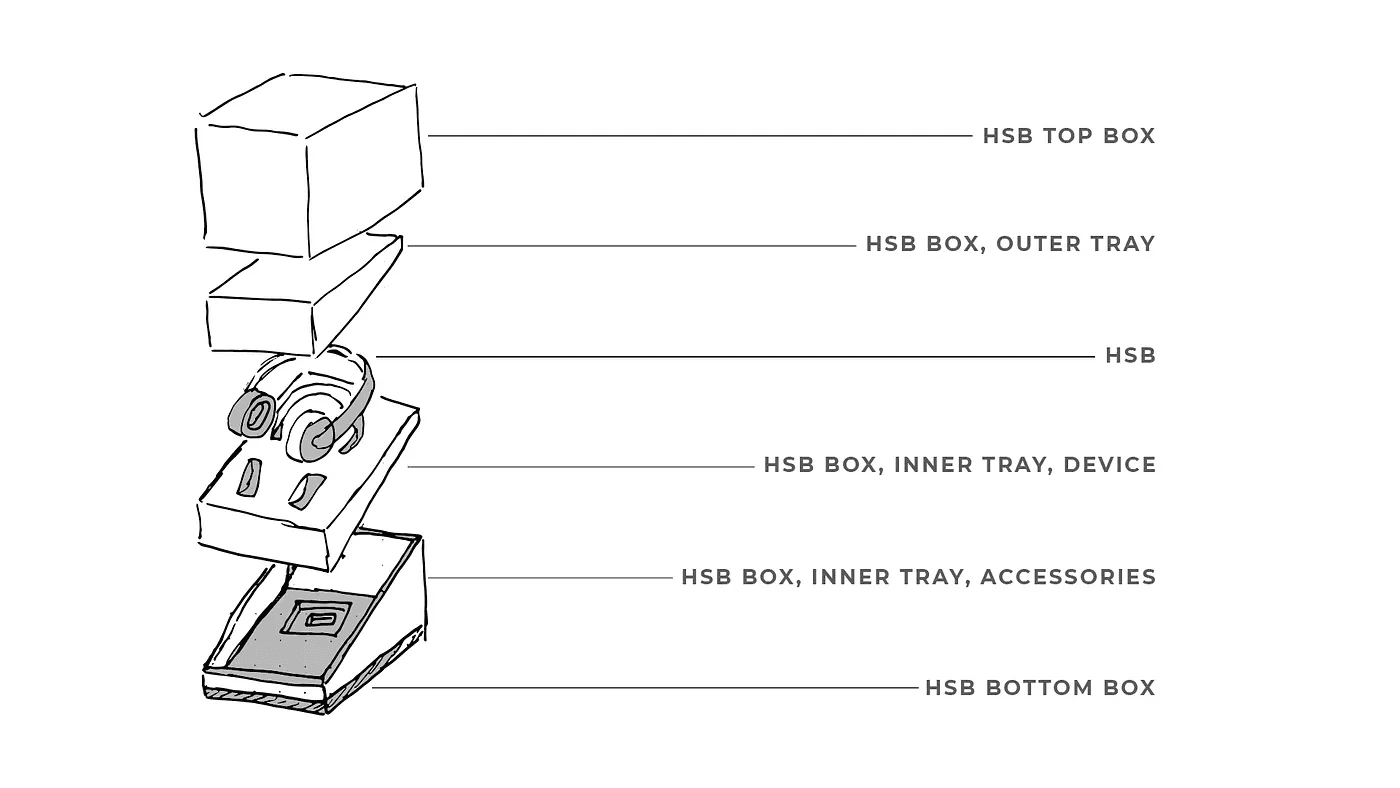
I didn't wait for someone to be hired. I didn't outsource it and hope for the best. I learned packaging design. Physical packaging isn't like screen design—it's three-dimensional, it's structural, it has manufacturing constraints that don't exist in digital. I taught myself Fusion 360, the CAD software used for industrial design and packaging prototyping, so I could model packaging structures accurately, test dimensional variations for pallet optimization, and create production-ready specs for manufacturers. This wasn't dabbling—this was learning a new discipline well enough to ship production work.
Great packaging needs great imagery, but professional product photography is expensive, and we couldn't afford to waste budget on the wrong shots. So I shot test photography myself to identify the exact angles, lighting, and compositions we needed. I created shot lists and references for the professional photographers we eventually hired, and I attended the shoots to ensure we got exactly what the packaging required. This wasn't micromanaging—this was de-risking a critical expense by doing the exploration work myself first.
I didn't just hand off specs and hope they worked. I talked directly to manufacturers to understand material trade-offs, selected materials that balanced premium feel with budget reality, and validated structural designs against their production capabilities. This ensured the packaging wasn't just beautiful—it was manufacturable at our volume and price point.
Implementation
Cinematic Within Constraints
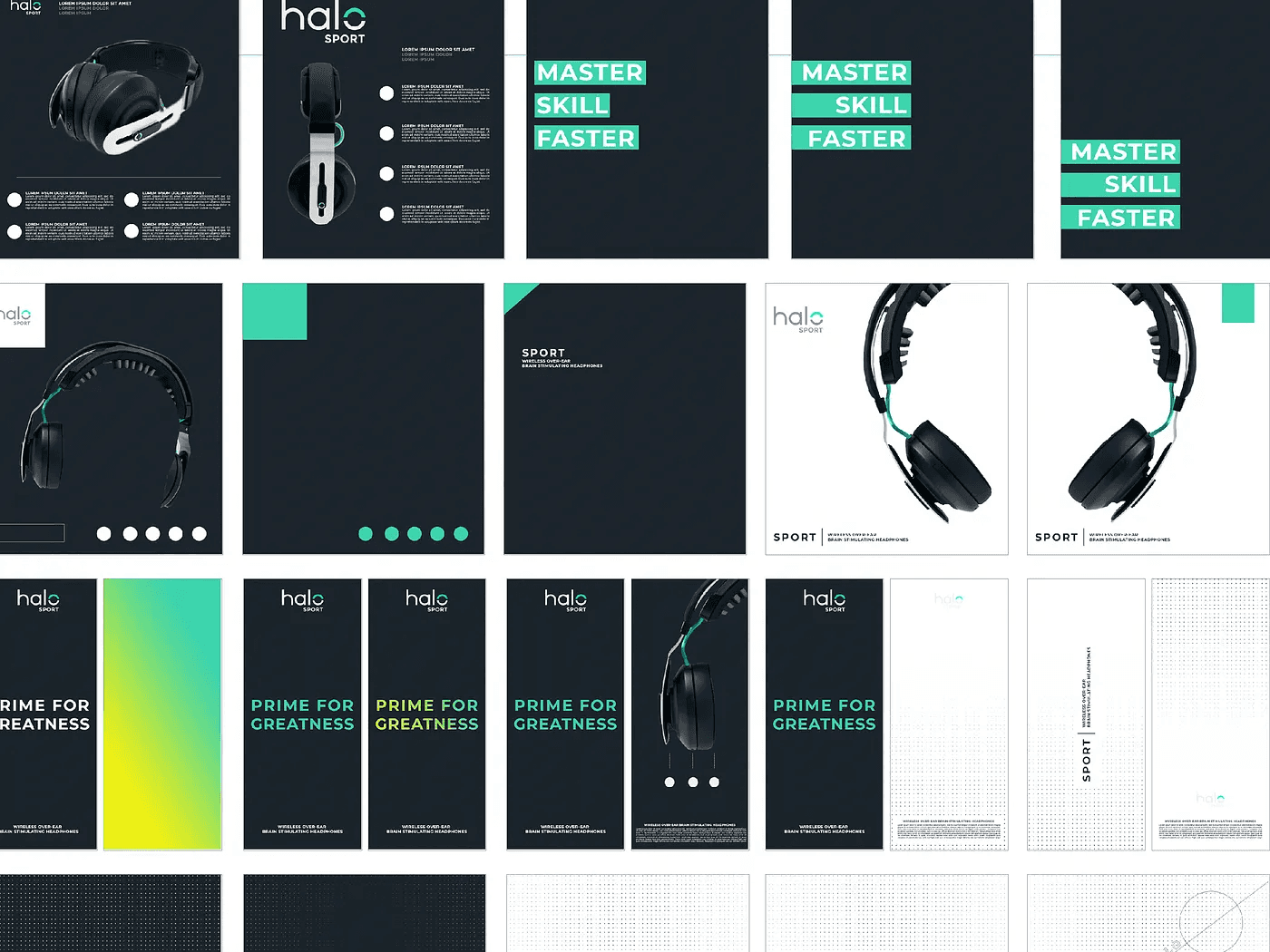
The brief was deceptively simple: make it feel cinematic. But "cinematic" doesn't mean expensive—it means intentional. The packaging needed to stand out on a shelf full of black tech gadgets, feel premium without looking overdesigned, communicate credibility through materiality and finish, and stay recognizable as part of the Halo brand family.
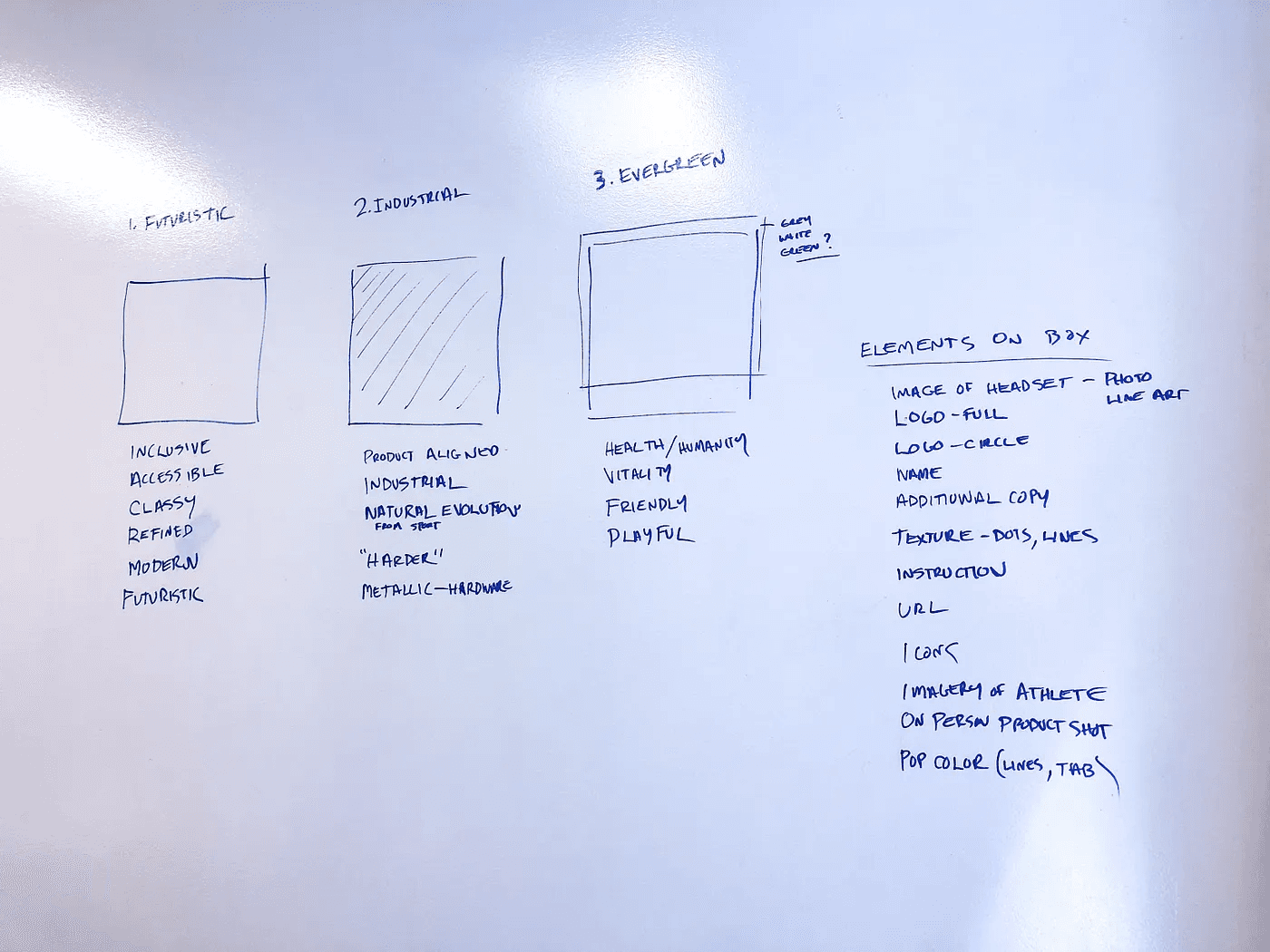
I explored multiple directions—minimalist tech with Apple-level restraint, bold athletic branding that put performance forward, and science-first positioning that emphasized clinical credibility. The final direction balanced all three: clean structure, premium materials, product-focused imagery, and subtle brand details that felt intentional rather than loud.
But the real challenge was optimizing for pallet efficiency. This is where packaging design intersects with logistics. Every millimeter matters when you're calculating how many units fit on a pallet, how shipping costs scale with dimensional weight, and how retail shelf space affects sell-through. I modeled multiple size variations in Fusion 360 to find the dimensions that protected the product, felt premium in-hand, maximized pallet density, and met retailer shelf standards. The packaging wasn't just designed—it was optimized for the entire supply chain.
Impact & Learnings
From Concept to Production
Once I had validated the structural design and identified the optimal dimensions, I worked with manufacturers to select materials that hit our quality bar within budget. We tested multiple substrates, finishes, and printing techniques to find the combination that delivered the premium feel we needed without blowing past our cost targets.
The photography direction I'd established through my test shoots paid off. When we brought in professional photographers, they knew exactly what we needed—the angles that showed the product's design quality, the lighting that conveyed premium feel, the compositions that would work within the packaging layout. We got what we needed in one shoot, with no expensive reshoots or surprises.
The production-ready specs I created in Fusion 360 gave manufacturers everything they needed to produce the packaging at scale. There were no back-and-forth revisions about dimensions or structural elements—the CAD files were precise and accounted for manufacturing tolerances from the start. This saved time and eliminated the risk of production delays.
What This Demonstrates
The Results
We sold over 1,700 units at launch, and customer feedback specifically called out the packaging as a positive differentiator. It didn't just "not hurt" the launch—it actively contributed to the product's positioning. The packaging looked like it belonged next to established premium brands, communicated quality and credibility at first glance, and supported both the retail and direct-to-consumer sales strategies.
By owning this internally instead of outsourcing, we saved hiring and agency costs, maintained creative control throughout the process, hit our launch timeline without delays, and delivered production-ready specs that manufacturers could execute without surprises. The packaging came in under budget and performed exactly as designed—both functionally and commercially.
The Bottom Line
This work shows how I approach gaps in team capabilities. I don't wait for the perfect team or the perfect brief. When something needs to happen and no one else can do it, I build the capability and deliver the outcome. I taught myself Fusion 360, not because I wanted to add CAD software to my resume, but because accurate 3D modeling was blocking our ability to ship packaging. I shot test photography, not because I wanted to be a photographer, but because we couldn't afford to waste budget on the wrong shots. I talked directly to manufacturers, not because I enjoy supply chain logistics, but because understanding material constraints was essential to designing something actually producible.
I also think in systems, not just surfaces. The packaging wasn't just about aesthetics—it was about brand positioning, unit economics, manufacturing feasibility, logistics optimization, and customer experience. I designed for all of it simultaneously, making trade-offs that balanced quality with cost, premium feel with pallet efficiency, and creative vision with production reality.
This is how I work: I see what needs to happen, I learn what I need to learn, and I make it happen. Whether that's systems architecture, user research, or industrial design—I figure it out and deliver.
Made with love in Orange County, CA.
Built in Figma Sites (Beta)
© Selected Works / Eric Sin
2018—2026
Halo Sport 2 Packaging
Designing shelf presence on a startup budget
The Challenge
Halo Sport 2 was launching into a market full of skepticism. Neuropriming technology that improves athletic performance sounds like science fiction—or worse, like the pseudoscience gadgets flooding the wellness market. The product worked, but looking legitimate was half the battle. And the first place people judged legitimacy was the packaging.
We had a new product, a tight budget, an aggressive launch timeline, and no packaging designer. The challenge wasn't just creating a box—it was creating something cinematic that communicated premium quality, staying under budget in a startup environment, maximizing pallet efficiency for cost-effective shipping, and making it look like it belonged next to established brands. This case study is about seeing a critical gap, teaching myself an entire discipline, and delivering work that directly contributed to a successful launch.
The Problem
We Had No Packaging Designer
Halo was a lean team. We had product designers, engineers, marketers—but no one who specialized in physical packaging. And packaging wasn't optional. It was the first brand touchpoint for retail customers, the credibility signal that separated us from cheap gadgets, and a manufacturing constraint that affected unit economics. Bad packaging wouldn't just look unprofessional—it would undermine the entire product positioning.
The constraints were real. This wasn't a blue-sky creative project where we could explore without limits. We had to stay within budget because startups don't have unlimited packaging dollars. We had to maximize pallet sizing because inefficient dimensions meant wasted shipping costs at scale. We had to work within manufacturing limitations because not every material or finish is cost-effective at our production volume. And we had to launch on schedule because there was no time to hire, onboard, and ramp a specialist.
The gap was clear: someone had to own this. That someone was me.
The Design Challenge
I Became the Packaging Designer
I didn't wait for someone to be hired. I didn't outsource it and hope for the best. I learned packaging design. Physical packaging isn't like screen design—it's three-dimensional, it's structural, it has manufacturing constraints that don't exist in digital. I taught myself Fusion 360, the CAD software used for industrial design and packaging prototyping, so I could model packaging structures accurately, test dimensional variations for pallet optimization, and create production-ready specs for manufacturers. This wasn't dabbling—this was learning a new discipline well enough to ship production work.
Great packaging needs great imagery, but professional product photography is expensive, and we couldn't afford to waste budget on the wrong shots. So I shot test photography myself to identify the exact angles, lighting, and compositions we needed. I created shot lists and references for the professional photographers we eventually hired, and I attended the shoots to ensure we got exactly what the packaging required. This wasn't micromanaging—this was de-risking a critical expense by doing the exploration work myself first.
I didn't just hand off specs and hope they worked. I talked directly to manufacturers to understand material trade-offs, selected materials that balanced premium feel with budget reality, and validated structural designs against their production capabilities. This ensured the packaging wasn't just beautiful—it was manufacturable at our volume and price point.
Implementation
Cinematic Within Constraints
The brief was deceptively simple: make it feel cinematic. But "cinematic" doesn't mean expensive—it means intentional. The packaging needed to stand out on a shelf full of black tech gadgets, feel premium without looking overdesigned, communicate credibility through materiality and finish, and stay recognizable as part of the Halo brand family.
I explored multiple directions—minimalist tech with Apple-level restraint, bold athletic branding that put performance forward, and science-first positioning that emphasized clinical credibility. The final direction balanced all three: clean structure, premium materials, product-focused imagery, and subtle brand details that felt intentional rather than loud.
But the real challenge was optimizing for pallet efficiency. This is where packaging design intersects with logistics. Every millimeter matters when you're calculating how many units fit on a pallet, how shipping costs scale with dimensional weight, and how retail shelf space affects sell-through. I modeled multiple size variations in Fusion 360 to find the dimensions that protected the product, felt premium in-hand, maximized pallet density, and met retailer shelf standards. The packaging wasn't just designed—it was optimized for the entire supply chain.
Impact & Learnings
From Concept to Production
Once I had validated the structural design and identified the optimal dimensions, I worked with manufacturers to select materials that hit our quality bar within budget. We tested multiple substrates, finishes, and printing techniques to find the combination that delivered the premium feel we needed without blowing past our cost targets.
The photography direction I'd established through my test shoots paid off. When we brought in professional photographers, they knew exactly what we needed—the angles that showed the product's design quality, the lighting that conveyed premium feel, the compositions that would work within the packaging layout. We got what we needed in one shoot, with no expensive reshoots or surprises.
The production-ready specs I created in Fusion 360 gave manufacturers everything they needed to produce the packaging at scale. There were no back-and-forth revisions about dimensions or structural elements—the CAD files were precise and accounted for manufacturing tolerances from the start. This saved time and eliminated the risk of production delays.
What This Demonstrates
The Results
We sold over 1,700 units at launch, and customer feedback specifically called out the packaging as a positive differentiator. It didn't just "not hurt" the launch—it actively contributed to the product's positioning. The packaging looked like it belonged next to established premium brands, communicated quality and credibility at first glance, and supported both the retail and direct-to-consumer sales strategies.
By owning this internally instead of outsourcing, we saved hiring and agency costs, maintained creative control throughout the process, hit our launch timeline without delays, and delivered production-ready specs that manufacturers could execute without surprises. The packaging came in under budget and performed exactly as designed—both functionally and commercially.
The Bottom Line
This work shows how I approach gaps in team capabilities. I don't wait for the perfect team or the perfect brief. When something needs to happen and no one else can do it, I build the capability and deliver the outcome. I taught myself Fusion 360, not because I wanted to add CAD software to my resume, but because accurate 3D modeling was blocking our ability to ship packaging. I shot test photography, not because I wanted to be a photographer, but because we couldn't afford to waste budget on the wrong shots. I talked directly to manufacturers, not because I enjoy supply chain logistics, but because understanding material constraints was essential to designing something actually producible.
I also think in systems, not just surfaces. The packaging wasn't just about aesthetics—it was about brand positioning, unit economics, manufacturing feasibility, logistics optimization, and customer experience. I designed for all of it simultaneously, making trade-offs that balanced quality with cost, premium feel with pallet efficiency, and creative vision with production reality.
This is how I work: I see what needs to happen, I learn what I need to learn, and I make it happen. Whether that's systems architecture, user research, or industrial design—I figure it out and deliver.
Made with love in Orange County, CA.
Built in Figma Sites (Beta)
© Selected Works / Eric Sin
2018—2026
Halo Sport 2 Packaging
Designing shelf presence on a startup budget
The Challenge
Halo Sport 2 was launching into a market full of skepticism. Neuropriming technology that improves athletic performance sounds like science fiction—or worse, like the pseudoscience gadgets flooding the wellness market. The product worked, but looking legitimate was half the battle. And the first place people judged legitimacy was the packaging.
We had a new product, a tight budget, an aggressive launch timeline, and no packaging designer. The challenge wasn't just creating a box—it was creating something cinematic that communicated premium quality, staying under budget in a startup environment, maximizing pallet efficiency for cost-effective shipping, and making it look like it belonged next to established brands. This case study is about seeing a critical gap, teaching myself an entire discipline, and delivering work that directly contributed to a successful launch.
The Problem
We Had No Packaging Designer
Halo was a lean team. We had product designers, engineers, marketers—but no one who specialized in physical packaging. And packaging wasn't optional. It was the first brand touchpoint for retail customers, the credibility signal that separated us from cheap gadgets, and a manufacturing constraint that affected unit economics. Bad packaging wouldn't just look unprofessional—it would undermine the entire product positioning.
The constraints were real. This wasn't a blue-sky creative project where we could explore without limits. We had to stay within budget because startups don't have unlimited packaging dollars. We had to maximize pallet sizing because inefficient dimensions meant wasted shipping costs at scale. We had to work within manufacturing limitations because not every material or finish is cost-effective at our production volume. And we had to launch on schedule because there was no time to hire, onboard, and ramp a specialist.
The gap was clear: someone had to own this. That someone was me.
The Design Challenge
Cinematic Within Constraints
The brief was deceptively simple: make it feel cinematic. But "cinematic" doesn't mean expensive—it means intentional. The packaging needed to stand out on a shelf full of black tech gadgets, feel premium without looking overdesigned, communicate credibility through materiality and finish, and stay recognizable as part of the Halo brand family.
I explored multiple directions—minimalist tech with Apple-level restraint, bold athletic branding that put performance forward, and science-first positioning that emphasized clinical credibility. The final direction balanced all three: clean structure, premium materials, product-focused imagery, and subtle brand details that felt intentional rather than loud.
But the real challenge was optimizing for pallet efficiency. This is where packaging design intersects with logistics. Every millimeter matters when you're calculating how many units fit on a pallet, how shipping costs scale with dimensional weight, and how retail shelf space affects sell-through. I modeled multiple size variations in Fusion 360 to find the dimensions that protected the product, felt premium in-hand, maximized pallet density, and met retailer shelf standards. The packaging wasn't just designed—it was optimized for the entire supply chain.
Implementation
From Concept to Production
Once I had validated the structural design and identified the optimal dimensions, I worked with manufacturers to select materials that hit our quality bar within budget. We tested multiple substrates, finishes, and printing techniques to find the combination that delivered the premium feel we needed without blowing past our cost targets.
The photography direction I'd established through my test shoots paid off. When we brought in professional photographers, they knew exactly what we needed—the angles that showed the product's design quality, the lighting that conveyed premium feel, the compositions that would work within the packaging layout. We got what we needed in one shoot, with no expensive reshoots or surprises.
The production-ready specs I created in Fusion 360 gave manufacturers everything they needed to produce the packaging at scale. There were no back-and-forth revisions about dimensions or structural elements—the CAD files were precise and accounted for manufacturing tolerances from the start. This saved time and eliminated the risk of production delays.
Impact & Learnings
The Results
We sold over 1,700 units at launch, and customer feedback specifically called out the packaging as a positive differentiator. It didn't just "not hurt" the launch—it actively contributed to the product's positioning. The packaging looked like it belonged next to established premium brands, communicated quality and credibility at first glance, and supported both the retail and direct-to-consumer sales strategies.
By owning this internally instead of outsourcing, we saved hiring and agency costs, maintained creative control throughout the process, hit our launch timeline without delays, and delivered production-ready specs that manufacturers could execute without surprises. The packaging came in under budget and performed exactly as designed—both functionally and commercially.
What This Demonstrates
This work shows how I approach gaps in team capabilities. I don't wait for the perfect team or the perfect brief. When something needs to happen and no one else can do it, I build the capability and deliver the outcome. I taught myself Fusion 360, not because I wanted to add CAD software to my resume, but because accurate 3D modeling was blocking our ability to ship packaging. I shot test photography, not because I wanted to be a photographer, but because we couldn't afford to waste budget on the wrong shots. I talked directly to manufacturers, not because I enjoy supply chain logistics, but because understanding material constraints was essential to designing something actually producible.
I also think in systems, not just surfaces. The packaging wasn't just about aesthetics—it was about brand positioning, unit economics, manufacturing feasibility, logistics optimization, and customer experience. I designed for all of it simultaneously, making trade-offs that balanced quality with cost, premium feel with pallet efficiency, and creative vision with production reality.
This is how I work: I see what needs to happen, I learn what I need to learn, and I make it happen. Whether that's systems architecture, user research, or industrial design—I figure it out and deliver.
The Bottom Line
When Halo needed packaging design and didn't have a packaging designer, I didn't wait for someone to be hired. I learned the discipline, shipped the work, and contributed directly to a successful launch. The packaging looked premium, came in under budget, maximized logistics efficiency, and earned specific praise from customers.
That's not being a generalist—that's being resourceful. That's seeing the critical path to impact and building whatever capabilities are needed to deliver it. That's the kind of designer I am, and that's the kind of impact I create.
Made with love in Orange County, CA.
Built in Figma Sites (Beta)
© Selected Works / Eric Sin
2018—2026